



Vitamins & Supplements for Kids by NuBest
FDA-Registered Facility - Made in the USA Supplements for Kids
Most parents don't start their kids on supplements because they're chasing some perfect nutritional formula. It usually comes down to something simpler: dinner where half the plate goes untouched, a picky streak that's lasted longer than anyone expected, or a growth spurt that seems to hit out of nowhere. A good children's supplement isn't meant to replace real food. It's there for the gaps food alone doesn't quite close.
The category has come a long way from the chalky tablets many of us remember. Chewables now taste like candy. Powders dissolve into a smoothie or stir into yogurt without a fight. Some products stick to the basics with a straightforward daily multivitamin, while others target something more specific, like immune support, focus, bone growth, or those unexplained afternoon energy dips.
Check the label on most of these and the same names keep showing up: vitamin D, calcium, magnesium, iron. Kids burn through them faster than parents tend to realize, especially during growth years. What matters just as much as the ingredient list is where those ingredients come from and how rigorously they're tested, something that gets far less attention than the packaging deserves.
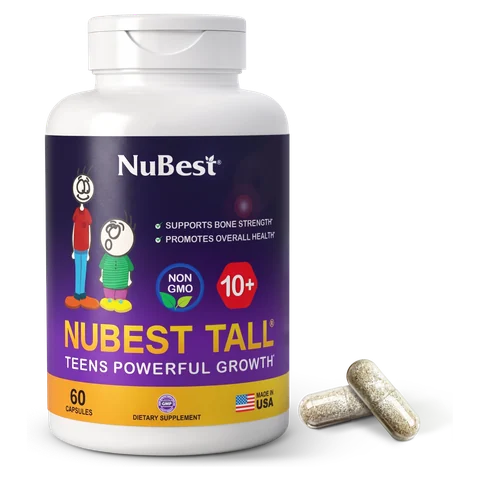
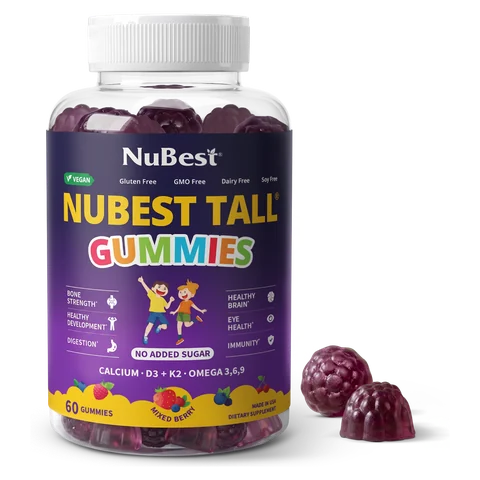
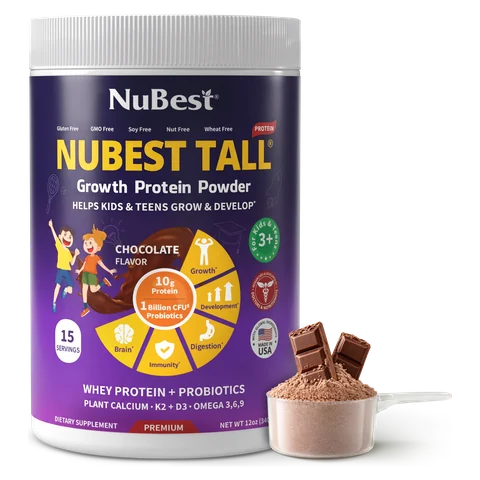
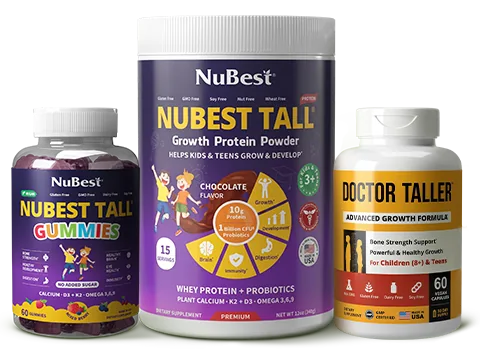
NuBest's lineup is built around that idea. Not one more thing to squeeze into an already packed routine, but a small, consistent way to cover whatever the day's meals happened to miss.


NuBest Tall Protein · Chocolate


NuBest Tall Fizzy


NuBest Tall Kids · 60 ct


NuBest Tall Protein · Vanilla


No products match all of these filters
Remove one condition to widen the results.
You’ve viewed 8 of 13 products
In this guide14 topics
Supplements for Kids
Which supplements are best for kids?
Walk down the supplement aisle and it's easy to feel lost. Every bottle claims to do something important, and most parents end up guessing. In practice, though, only a handful of categories come up again and again in pediatric nutrition, because they target the gaps that show up most often in kids' diets:- Calcium and vitamin D
- Vitamin C
- Probiotics
- Omega-3 fatty acids
- Growth vitamins and nutritional supplements for kids
Are there supplements to help kids grow?
Growth is usually the first thing parents ask about. Supplements aimed at helping kids grow taller and stronger generally focus on calcium and vitamin D, since bone tissue depends on both throughout childhood. A shortfall in either one can slow growth in ways that aren't obvious right away. Brands like NuBest are popular because they pair these two nutrients with compounds tied to bone density. Just keep expectations realistic: growth happens gradually, and no supplement produces results you'll notice within days.Are gummy vitamins good for kids?
If getting your child to swallow a pill turns into a daily fight, gummies are a practical alternative, and they can make it much easier to keep a picky eater on a consistent routine. The downside is sugar and artificial dyes, so it's worth choosing dye-free formulas, checking the sugar content on the label, and sticking to the recommended serving size. Skip that step and gummy vitamins start to function more like candy than a supplement.Is it okay to give supplements to kids?
In most cases, yes, as long as there's some thought behind the choice. It's a good idea to check with a pediatrician first, especially if you're planning to use a supplement for more than a few weeks. The brand matters less than getting the dosage right and giving it consistently.Should you give kids supplements?
"Just in case" isn't really a good enough reason on its own. A child eating a reasonably varied diet usually gets what they need from food, and supplements won't add much. They become more useful when meals are limited, when certain food groups are consistently missing, or when growth seems to be lagging. In those situations, a pediatrician can help determine whether there's an actual deficiency or just normal variation.Does my child need a supplement?
Parents often notice something is off before they can pinpoint what it is: prolonged picky eating, low energy, slower growth than expected, or getting sick more often than usual. Sometimes bloodwork will confirm a deficiency. Other times, simply tracking eating habits and energy levels over a few weeks gives you a clear enough picture.Do you need to give your baby supplements?
Vitamin D is the one that comes up early, particularly for breastfed babies. Beyond that, it depends on how the baby is being fed, their health history, and what the pediatrician observes at checkups.Why are supplements important for children?
They matter mainly when food alone isn't covering a child's nutritional needs. This comes up often during growth spurts, when gaps in calcium, vitamin D, iron, or other nutrients can affect bone development and immune function without any obvious symptoms at first.What happens if kids don't take vitamins?
If a child's diet is well-rounded, skipping vitamins usually isn't a problem. But when there are real gaps that last for months, deficiencies build up over time and eventually show up as weaker immunity, slower growth, or trouble concentrating.When should kids start taking supplements?
There's no fixed age or milestone that applies to everyone. Most parents start once a specific concern comes up, such as a persistently limited diet or a growth concern flagged by a pediatrician.What is the minimum age for supplements?
Most products on the market are formulated for children age 4 and up. For anything younger, it's best to talk to a pediatrician before starting.Do children's vitamins really work?
They work, but as a backup rather than a substitute. Supplements can fill in specific nutritional gaps, but they can't replace what a balanced diet provides on its own.What is the best vitamin for kids?
Look for a formula that covers the key vitamins and minerals in reasonable, age-appropriate amounts, without excessive dosing. This is one reason some parents consider options like NuBest growth vitamins for kids.What vitamin is good for kids' brains?
Omega-3 fatty acids get the most attention for brain development, and for good reason. Iron, zinc, magnesium, vitamin D, and B12 also play important roles in cognitive development and focus, so a well-rounded diet (or supplement) matters more than any single nutrient.Common Questions About Supplements for Kids and Vitamins:
Should kids take magnesium?
- 80 mg daily for toddlers aged 1–3
- 130 mg daily for kids aged 4–8
- 240 mg daily for kids aged 9–13
Should kids take probiotics?
Should kids take omega-3?
Should children take vitamin D?
- Around 400 IU daily for babies under 1
- Roughly 600 to 1,000 IU daily once they hit age 1
How do I build up my child's immune system?
Here are 8 ways to support your child's immune system:
- Feed them a balanced, nutrient-rich diet.
- Make sure they're getting enough sleep.
- Keep them moving with daily activity.
- Don't skip hydration — it matters more than you'd think.
- Teach solid hygiene habits early.
- Cut back on sugary, processed snacks.
- Help them manage stress.
- Consider kid-friendly supplements like vitamin D or probiotics.